'/%3e%3cpath%20id='spade'%20class='cls-2'%20d='M196.08,56.6l13.014,57.987-0.309-9.652,5.264-1.239c1.872,8.514,1.127,16.417-3.508,21.2-6.22-2.229-10.283-9-12.255-17.49l6.371-1.5L193.731,57.155a7.077,7.077,0,0,1-7.267-5.564,7.263,7.263,0,0,1,.171-3.822l11.8-2.777A7.261,7.261,0,0,1,196.08,56.6Zm1.688-8.932-9.39,2.209a4.523,4.523,0,0,0,.1,1.237,4.82,4.82,0,0,0,5.909,3.472,4.922,4.922,0,0,0,3.822-5.762A4.461,4.461,0,0,0,197.768,47.67Z'%20transform='translate(-94.969%20-45)'/%3e%3cpath%20id='GARDEN'%20class='cls-2'%20d='M118.015,68.918H119.6V73c0,1.581-.7,2.15-1.81,2.15s-1.809-.569-1.809-2.15V61.045c0-1.581.7-2.182,1.809-2.182s1.81,0.6,1.81,2.182v2.371h3.3v-2.15c0-3.541-1.778-5.565-5.206-5.565s-5.206,2.024-5.206,5.565V72.775c0,3.541,1.778,5.565,5.206,5.565s5.206-2.024,5.206-5.565V65.756h-4.889v3.162Zm16.127-12.963h-5.111l-3.556,22.133h3.206l0.6-4.016h4.285l0.6,4.016H137.7Zm-2.731,3.92,1.683,11.193h-3.365Zm20.031,18.212a6.5,6.5,0,0,1-.381-2.688V71.985c0-2.308-.572-3.984-2.317-4.711,1.555-.727,2.285-2.213,2.285-4.49V61.045c0-3.415-1.555-5.09-5.174-5.09h-5.27V78.087h3.492V69.076h1.206c1.588,0,2.286.759,2.286,2.814v3.478a6.8,6.8,0,0,0,.317,2.719h3.556ZM145.76,59.116c1.238,0,1.777.7,1.777,2.276v2.182c0,1.771-.793,2.34-2.095,2.34h-1.365v-6.8h1.683Zm8.855,18.971h5.524c3.492,0,5.206-1.929,5.206-5.47V61.424c0-3.541-1.714-5.47-5.206-5.47h-5.524V78.087Zm5.461-18.971c1.111,0,1.777.569,1.777,2.15V72.775c0,1.581-.666,2.15-1.777,2.15h-1.969V59.116h1.969Zm12.252,0h6.032V55.954h-9.524V78.087h9.524V74.925h-6.032V68.444h4.794V65.282h-4.794V59.116Zm16.92,18.971h3.587V55.954h-3.111V69.2l-3.588-13.248h-4.38V78.087H184.9V62.057Z'%20transform='translate(-94.969%20-45)'/%3e%3cpath%20id='SCAPE'%20class='cls-3'%20d='M110.82,88.258c0,8.278,8.935,9.4,8.935,15.357,0,2.069-.915,2.814-2.369,2.814s-2.369-.745-2.369-2.814v-2.07H110.7v1.78c0,4.636,2.327,7.285,6.816,7.285s6.815-2.649,6.815-7.285c0-8.278-8.935-9.4-8.935-15.356,0-2.07.831-2.856,2.286-2.856s2.286,0.786,2.286,2.856v1.2h4.322V88.258c0-4.636-2.286-7.285-6.733-7.285S110.82,83.622,110.82,88.258Zm26.72,11.217v4.14c0,2.069-.914,2.814-2.369,2.814s-2.369-.745-2.369-2.814V87.969c0-2.07.915-2.856,2.369-2.856s2.369,0.786,2.369,2.856v3.1h4.322V88.258c0-4.636-2.327-7.285-6.815-7.285s-6.816,2.649-6.816,7.285v15.067c0,4.636,2.327,7.285,6.816,7.285s6.815-2.649,6.815-7.285v-3.85H137.54ZM156.447,81.3h-6.691L145.1,110.279h4.2l0.79-5.257h5.61l0.79,5.257H161.1Zm-3.574,5.133,2.2,14.653h-4.405ZM171.614,81.3h-6.732v28.975h4.571V99.393h2.161c4.572,0,6.816-2.525,6.816-7.161V88.465C178.43,83.829,176.186,81.3,171.614,81.3Zm0,4.139c1.455,0,2.245.662,2.245,2.732v4.346c0,2.07-.79,2.732-2.245,2.732h-2.161v-9.81h2.161Zm15.168,0h7.9V81.3H182.211v28.975h12.467V106.14h-7.9V97.654h6.275V93.515h-6.275V85.443Z'%20transform='translate(-94.969%20-45)'/%3e%3c/svg%3e)
Garden walls in Essex
Get a free, no-obligation quote.
CallGet a quoteA garden wall can mark an entrance, define a seating area or give a planted border a clear edge. Brick garden walls also introduce texture and a sense of permanence alongside paving and planting. Start with the purpose and position of the wall, then consider the appearance and construction needed for that setting.
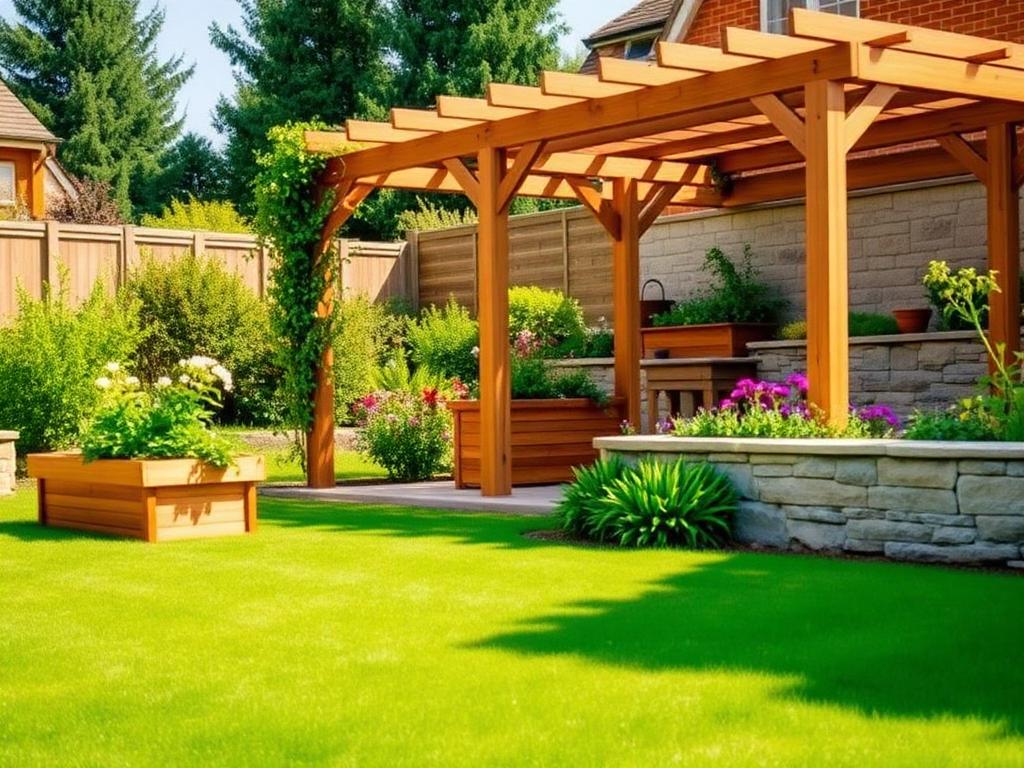
Add structure and interest to your garden with bespoke pergolas, raised beds, retaining walls and water features, all built to a high standard.
We work with you to design features that complement your home and landscape, all backed by our ten year guarantee.
Decide what the wall should do
A low wall beside a patio creates a different effect from a taller boundary. Think about whether you want a view across the garden, a defined division between spaces or a backdrop for planting. Mark the proposed line before choosing bricks so you can judge how much usable space remains.
Entrances and corners deserve particular attention. Leave room to move furniture, reach beds and open gates without squeezing around masonry. A wall can make a garden feel organised, but an awkward return or narrow passage may become frustrating in daily use. Consider the routes as carefully as the appearance.
Choosing brickwork that belongs in the garden
Brick colour, surface texture and mortar joints all influence the finished look. A close relationship with the house can feel cohesive, while a deliberate contrast may suit a separate garden feature. Compare samples outdoors and consider how the brickwork will sit beside existing paving rather than judging it in isolation.
An exact match to older brickwork is not always possible. Weathering, previous repairs and differences between batches can remain visible. If part of an existing wall is staying, discuss the junction and overall effect before work is agreed. A considered transition is preferable to assuming new masonry will immediately look old.
Foundations and the top of the wall
The visible bricks are only part of a wall. Ground conditions, dimensions and exposure influence what supports it, so a foundation detail should not be selected from appearance alone. Nearby trees, existing services and disturbed ground can also affect the proposed line. Describe anything you know about previous work in that area.
The top needs a suitable finishing detail too. Coping or another appropriate cap helps manage rain at the wall head, while the surrounding levels should avoid trapping water against the masonry. Ask how the ends, corners and connection to existing features will be finished, not simply which brick will be used.
Boundary walls are not retaining walls
A wall dividing spaces on similar ground levels is different from a wall holding back soil. Once ground is higher on one side, the retained material and water behind it introduce additional forces. A decorative garden wall detail should not be assumed suitable for that job, even when the visible height seems modest.
Our retaining walls page deals separately with level changes, structural loads and drainage behind the wall. If you are unsure which applies, explain the levels on both sides and what sits nearby. Tell us about slopes, vehicles or buildings above the proposed wall rather than describing it only as a brick boundary.
Planning the work and comparing costs
Check boundary ownership before replacing shared features, and establish whether planning restrictions affect the proposed height or position. Walls beside highways, listed properties and protected settings can need particular checks. Confirm the requirements for your property with the relevant authority instead of assuming every garden wall follows the same rules.
Cost depends on length, height, brick choice, foundations, access and removal of existing material. Changes in direction and detailed finishes can alter the scope too. Discuss garden walls as part of the wider landscaping enquiry during a free site visit, then compare the agreed preparation and finish in the fixed written quote.
Your questions answered
Is a garden wall also a retaining wall?
Not necessarily. A boundary wall divides spaces; a retaining wall supports higher ground and needs a design suited to that load.
What affects garden wall cost?
Length, height, foundations, brick choice, access and removal affect the work. The site visit establishes the proposed scope.
Can new bricks match an existing wall?
An exact match is not always possible. Compare samples alongside the existing masonry and discuss the junction before agreeing the finish.
Should I check permission before changing a wall?
Check ownership and relevant planning restrictions, especially beside a highway or at a listed or protected property.
Interested in this service?
Get a free, no-obligation quote today.
Landscape Structures across Essex
We install landscape structures in towns within 30 miles of our Southend-on-Sea base.
View all areas we cover