'/%3e%3cpath%20id='spade'%20class='cls-2'%20d='M196.08,56.6l13.014,57.987-0.309-9.652,5.264-1.239c1.872,8.514,1.127,16.417-3.508,21.2-6.22-2.229-10.283-9-12.255-17.49l6.371-1.5L193.731,57.155a7.077,7.077,0,0,1-7.267-5.564,7.263,7.263,0,0,1,.171-3.822l11.8-2.777A7.261,7.261,0,0,1,196.08,56.6Zm1.688-8.932-9.39,2.209a4.523,4.523,0,0,0,.1,1.237,4.82,4.82,0,0,0,5.909,3.472,4.922,4.922,0,0,0,3.822-5.762A4.461,4.461,0,0,0,197.768,47.67Z'%20transform='translate(-94.969%20-45)'/%3e%3cpath%20id='GARDEN'%20class='cls-2'%20d='M118.015,68.918H119.6V73c0,1.581-.7,2.15-1.81,2.15s-1.809-.569-1.809-2.15V61.045c0-1.581.7-2.182,1.809-2.182s1.81,0.6,1.81,2.182v2.371h3.3v-2.15c0-3.541-1.778-5.565-5.206-5.565s-5.206,2.024-5.206,5.565V72.775c0,3.541,1.778,5.565,5.206,5.565s5.206-2.024,5.206-5.565V65.756h-4.889v3.162Zm16.127-12.963h-5.111l-3.556,22.133h3.206l0.6-4.016h4.285l0.6,4.016H137.7Zm-2.731,3.92,1.683,11.193h-3.365Zm20.031,18.212a6.5,6.5,0,0,1-.381-2.688V71.985c0-2.308-.572-3.984-2.317-4.711,1.555-.727,2.285-2.213,2.285-4.49V61.045c0-3.415-1.555-5.09-5.174-5.09h-5.27V78.087h3.492V69.076h1.206c1.588,0,2.286.759,2.286,2.814v3.478a6.8,6.8,0,0,0,.317,2.719h3.556ZM145.76,59.116c1.238,0,1.777.7,1.777,2.276v2.182c0,1.771-.793,2.34-2.095,2.34h-1.365v-6.8h1.683Zm8.855,18.971h5.524c3.492,0,5.206-1.929,5.206-5.47V61.424c0-3.541-1.714-5.47-5.206-5.47h-5.524V78.087Zm5.461-18.971c1.111,0,1.777.569,1.777,2.15V72.775c0,1.581-.666,2.15-1.777,2.15h-1.969V59.116h1.969Zm12.252,0h6.032V55.954h-9.524V78.087h9.524V74.925h-6.032V68.444h4.794V65.282h-4.794V59.116Zm16.92,18.971h3.587V55.954h-3.111V69.2l-3.588-13.248h-4.38V78.087H184.9V62.057Z'%20transform='translate(-94.969%20-45)'/%3e%3cpath%20id='SCAPE'%20class='cls-3'%20d='M110.82,88.258c0,8.278,8.935,9.4,8.935,15.357,0,2.069-.915,2.814-2.369,2.814s-2.369-.745-2.369-2.814v-2.07H110.7v1.78c0,4.636,2.327,7.285,6.816,7.285s6.815-2.649,6.815-7.285c0-8.278-8.935-9.4-8.935-15.356,0-2.07.831-2.856,2.286-2.856s2.286,0.786,2.286,2.856v1.2h4.322V88.258c0-4.636-2.286-7.285-6.733-7.285S110.82,83.622,110.82,88.258Zm26.72,11.217v4.14c0,2.069-.914,2.814-2.369,2.814s-2.369-.745-2.369-2.814V87.969c0-2.07.915-2.856,2.369-2.856s2.369,0.786,2.369,2.856v3.1h4.322V88.258c0-4.636-2.327-7.285-6.815-7.285s-6.816,2.649-6.816,7.285v15.067c0,4.636,2.327,7.285,6.816,7.285s6.815-2.649,6.815-7.285v-3.85H137.54ZM156.447,81.3h-6.691L145.1,110.279h4.2l0.79-5.257h5.61l0.79,5.257H161.1Zm-3.574,5.133,2.2,14.653h-4.405ZM171.614,81.3h-6.732v28.975h4.571V99.393h2.161c4.572,0,6.816-2.525,6.816-7.161V88.465C178.43,83.829,176.186,81.3,171.614,81.3Zm0,4.139c1.455,0,2.245.662,2.245,2.732v4.346c0,2.07-.79,2.732-2.245,2.732h-2.161v-9.81h2.161Zm15.168,0h7.9V81.3H182.211v28.975h12.467V106.14h-7.9V97.654h6.275V93.515h-6.275V85.443Z'%20transform='translate(-94.969%20-45)'/%3e%3c/svg%3e)
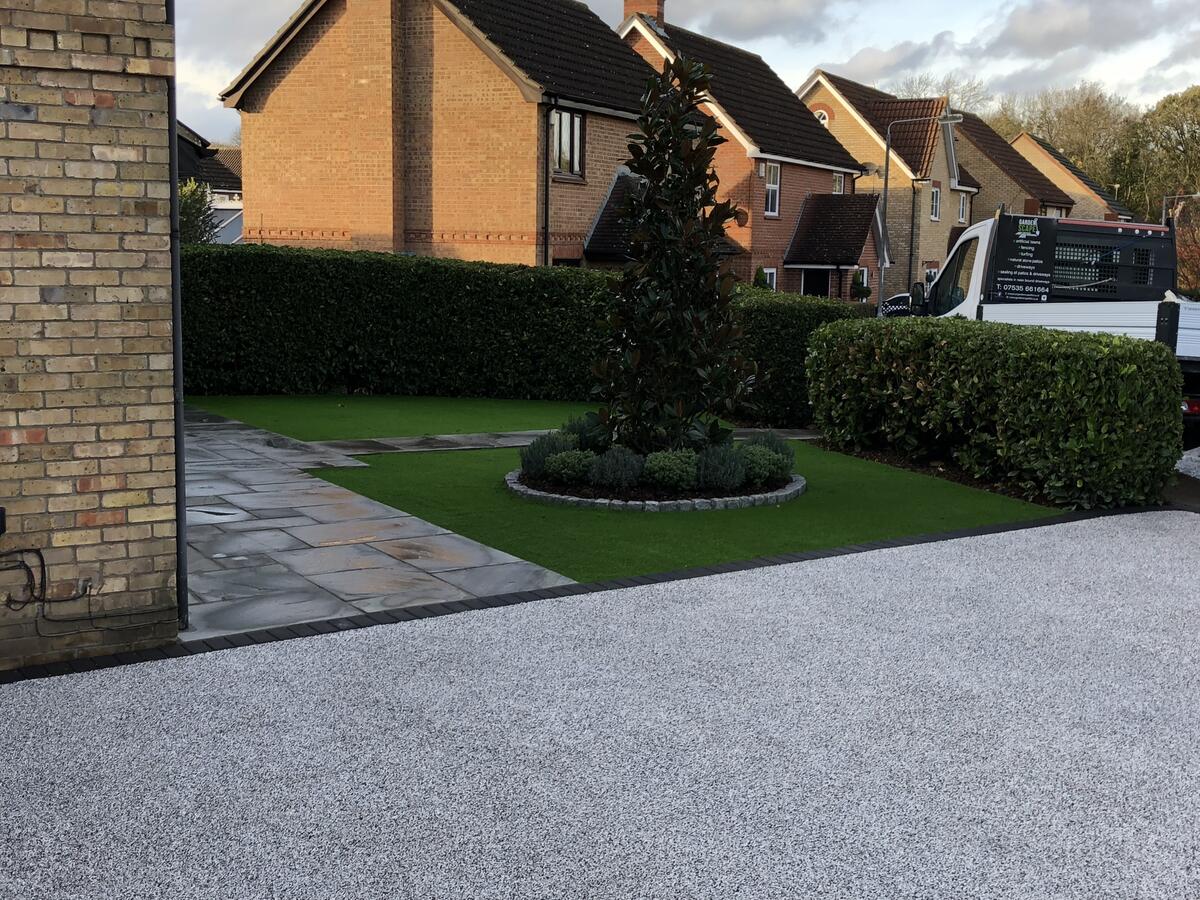
Indian sandstone patios with natural variation
Indian sandstone brings variation in colour and texture to a paved garden. Rather than a uniform printed surface, each slab contributes its own markings to the finished area. Gardenscape installs natural stone patios across Essex, with the material choice considered alongside the layout, ground preparation and drainage.
A sandstone patio is a construction project as well as a stone purchase. The appeal of the slabs needs matching with a suitable base, planned levels and joints appropriate to outdoor use. Discuss how you want to use the space, the look you prefer and the cleaning you are comfortable doing before agreeing the specification.
Choose the finish in the context of the garden
Riven sandstone has a naturally textured face that can suit informal planting and traditional surroundings. Sawn finishes offer a different appearance and feel. Colour names alone are not a precise guide: natural variation means individual slabs can differ, and stone generally looks deeper in colour when wet.
Look at samples in the light where the patio will sit and consider the texture under furniture as well as underfoot. Mixed sizes can create a varied pattern, while a more regular format gives a quieter layout. Borders, paths and any steps should be considered alongside the main paving rather than chosen after the slabs arrive.
Prepare the ground for the finished surface
The installation needs excavation and a compacted sub-base suited to the ground and intended use. Existing paving, soft areas and access for removing spoil can affect that work. Laying attractive stone over an inadequate base leaves the original weakness underneath, regardless of the thickness or quality of the slabs.
A full mortar bed supports the paving rather than leaving isolated spots beneath it. Slab thickness, the chosen stone and the laying system influence the bedding detail. Levels and falls need establishing before laying so the finished surface sheds water to an appropriate destination while respecting thresholds, damp-proof courses and adjoining areas.
Detail the joints, edges and changes in level
Jointing should suit the stone and the proposed installation, with the joint dimensions and application requirements agreed together. Mortar or compound smeared over porous sandstone can leave difficult marks, so clean working matters. The edge detail also needs a clear finish where the patio meets lawn, borders or a path.
Where steps are included, consider consistent rises, useful tread space and the appearance of exposed edges. A seating terrace cut into a slope may need retaining and drainage beyond the paving itself. These details belong in the initial scope because they affect the groundworks and the practical size of the finished patio.
Decide whether sealing adds value
Sandstone is porous, so spills and organic staining can soak into the surface. A compatible impregnating sealer can reduce absorption and make cleaning easier. That is a reason to consider sealing, not a rule that every sandstone patio must receive the same product. Location, use and the chosen finish all affect the decision.
Some sealers alter colour or sheen, while film-forming products can change how the surface behaves underfoot. Test the proposed product on an offcut or discreet area first. Paving and jointing must be appropriately cured and thoroughly dry, following product instructions. Sealing damp stone can trap moisture; sealing also needs future renewal and does not replace routine cleaning or sound drainage.
Your questions answered
Will every Indian sandstone slab look the same?
No. Variation is part of natural stone, including differences in tone and markings. Samples help establish the overall character, but should not be taken as a promise that every slab will match exactly.
Does sandstone need sealing immediately after laying?
Not automatically. First decide whether sealing suits the stone and your needs. The paving and joints must have cured and dried sufficiently, with timing determined by the selected products and conditions.
Can I pressure wash a sandstone patio?
Use care. Aggressive pressure washing can damage softer stone and joints. A cleaner suitable for the material and a gentler rinse are often a better starting point; follow the stone and cleaning product guidance.
What should a sandstone installation quote cover?
It should identify the paving, preparation, bedding, jointing, edges and drainage, plus removal work and any steps. If sealing is wanted, clarify its product and scope rather than assuming it is included in the laying price.