'/%3e%3cpath%20id='spade'%20class='cls-2'%20d='M196.08,56.6l13.014,57.987-0.309-9.652,5.264-1.239c1.872,8.514,1.127,16.417-3.508,21.2-6.22-2.229-10.283-9-12.255-17.49l6.371-1.5L193.731,57.155a7.077,7.077,0,0,1-7.267-5.564,7.263,7.263,0,0,1,.171-3.822l11.8-2.777A7.261,7.261,0,0,1,196.08,56.6Zm1.688-8.932-9.39,2.209a4.523,4.523,0,0,0,.1,1.237,4.82,4.82,0,0,0,5.909,3.472,4.922,4.922,0,0,0,3.822-5.762A4.461,4.461,0,0,0,197.768,47.67Z'%20transform='translate(-94.969%20-45)'/%3e%3cpath%20id='GARDEN'%20class='cls-2'%20d='M118.015,68.918H119.6V73c0,1.581-.7,2.15-1.81,2.15s-1.809-.569-1.809-2.15V61.045c0-1.581.7-2.182,1.809-2.182s1.81,0.6,1.81,2.182v2.371h3.3v-2.15c0-3.541-1.778-5.565-5.206-5.565s-5.206,2.024-5.206,5.565V72.775c0,3.541,1.778,5.565,5.206,5.565s5.206-2.024,5.206-5.565V65.756h-4.889v3.162Zm16.127-12.963h-5.111l-3.556,22.133h3.206l0.6-4.016h4.285l0.6,4.016H137.7Zm-2.731,3.92,1.683,11.193h-3.365Zm20.031,18.212a6.5,6.5,0,0,1-.381-2.688V71.985c0-2.308-.572-3.984-2.317-4.711,1.555-.727,2.285-2.213,2.285-4.49V61.045c0-3.415-1.555-5.09-5.174-5.09h-5.27V78.087h3.492V69.076h1.206c1.588,0,2.286.759,2.286,2.814v3.478a6.8,6.8,0,0,0,.317,2.719h3.556ZM145.76,59.116c1.238,0,1.777.7,1.777,2.276v2.182c0,1.771-.793,2.34-2.095,2.34h-1.365v-6.8h1.683Zm8.855,18.971h5.524c3.492,0,5.206-1.929,5.206-5.47V61.424c0-3.541-1.714-5.47-5.206-5.47h-5.524V78.087Zm5.461-18.971c1.111,0,1.777.569,1.777,2.15V72.775c0,1.581-.666,2.15-1.777,2.15h-1.969V59.116h1.969Zm12.252,0h6.032V55.954h-9.524V78.087h9.524V74.925h-6.032V68.444h4.794V65.282h-4.794V59.116Zm16.92,18.971h3.587V55.954h-3.111V69.2l-3.588-13.248h-4.38V78.087H184.9V62.057Z'%20transform='translate(-94.969%20-45)'/%3e%3cpath%20id='SCAPE'%20class='cls-3'%20d='M110.82,88.258c0,8.278,8.935,9.4,8.935,15.357,0,2.069-.915,2.814-2.369,2.814s-2.369-.745-2.369-2.814v-2.07H110.7v1.78c0,4.636,2.327,7.285,6.816,7.285s6.815-2.649,6.815-7.285c0-8.278-8.935-9.4-8.935-15.356,0-2.07.831-2.856,2.286-2.856s2.286,0.786,2.286,2.856v1.2h4.322V88.258c0-4.636-2.286-7.285-6.733-7.285S110.82,83.622,110.82,88.258Zm26.72,11.217v4.14c0,2.069-.914,2.814-2.369,2.814s-2.369-.745-2.369-2.814V87.969c0-2.07.915-2.856,2.369-2.856s2.369,0.786,2.369,2.856v3.1h4.322V88.258c0-4.636-2.327-7.285-6.815-7.285s-6.816,2.649-6.816,7.285v15.067c0,4.636,2.327,7.285,6.816,7.285s6.815-2.649,6.815-7.285v-3.85H137.54ZM156.447,81.3h-6.691L145.1,110.279h4.2l0.79-5.257h5.61l0.79,5.257H161.1Zm-3.574,5.133,2.2,14.653h-4.405ZM171.614,81.3h-6.732v28.975h4.571V99.393h2.161c4.572,0,6.816-2.525,6.816-7.161V88.465C178.43,83.829,176.186,81.3,171.614,81.3Zm0,4.139c1.455,0,2.245.662,2.245,2.732v4.346c0,2.07-.79,2.732-2.245,2.732h-2.161v-9.81h2.161Zm15.168,0h7.9V81.3H182.211v28.975h12.467V106.14h-7.9V97.654h6.275V93.515h-6.275V85.443Z'%20transform='translate(-94.969%20-45)'/%3e%3c/svg%3e)
Choosing a raised bed construction material
Sleeper vs Brick Raised Beds
Raised beds are one of the cheapest ways to add structure to a garden. The material you build them from decides how long they last and how they look against the house.
For growing food, one specific point matters more than the rest.
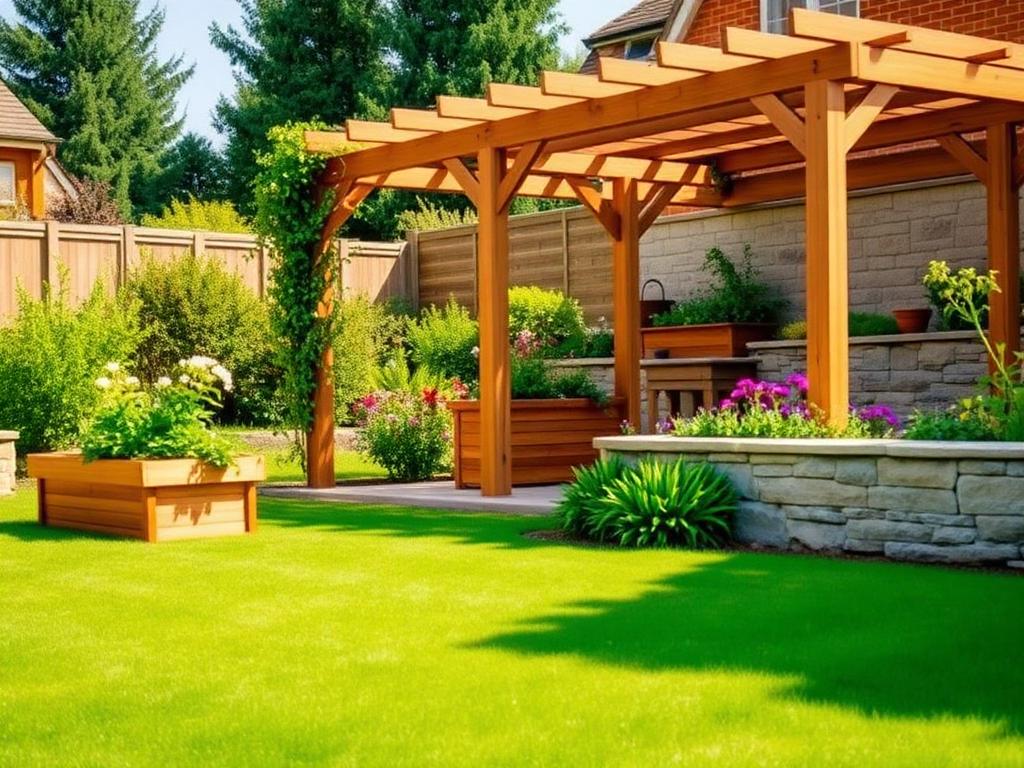
Sleepers and timber
New treated softwood sleepers are quick to build with, cost less than masonry and suit informal, contemporary gardens. Oak sleepers cost more and last far longer.
Reclaimed railway sleepers are often treated with creosote and are not suitable for food growing or where children play; new landscaping sleepers avoid that issue.
Brick and block
Masonry beds last decades, match a house's brickwork and can carry heavier loads or double as seating. They need a proper footing, drainage and a damp membrane behind.
They cost more and take longer to build, so they suit permanent, prominent positions.
What both need
Drainage at the base, a liner behind timber to slow decay, and enough depth for the plants you intend to grow — deeper beds dry out far more slowly.
Where beds retain a significant level change, they become retaining structures and need designing as such.
Frequently asked questions
Are sleepers safe for vegetables?
New landscaping-grade treated or untreated hardwood sleepers are; old creosoted railway sleepers are not.
How long do timber beds last?
Treated softwood typically gives a good number of years; oak considerably longer.
Do raised beds need a footing?
Timber usually sits on compacted stone; masonry needs a proper concrete footing.
Related reading
Adding structure to a garden?
We build sleeper and masonry beds, planters and seating walls.