'/%3e%3cpath%20id='spade'%20class='cls-2'%20d='M196.08,56.6l13.014,57.987-0.309-9.652,5.264-1.239c1.872,8.514,1.127,16.417-3.508,21.2-6.22-2.229-10.283-9-12.255-17.49l6.371-1.5L193.731,57.155a7.077,7.077,0,0,1-7.267-5.564,7.263,7.263,0,0,1,.171-3.822l11.8-2.777A7.261,7.261,0,0,1,196.08,56.6Zm1.688-8.932-9.39,2.209a4.523,4.523,0,0,0,.1,1.237,4.82,4.82,0,0,0,5.909,3.472,4.922,4.922,0,0,0,3.822-5.762A4.461,4.461,0,0,0,197.768,47.67Z'%20transform='translate(-94.969%20-45)'/%3e%3cpath%20id='GARDEN'%20class='cls-2'%20d='M118.015,68.918H119.6V73c0,1.581-.7,2.15-1.81,2.15s-1.809-.569-1.809-2.15V61.045c0-1.581.7-2.182,1.809-2.182s1.81,0.6,1.81,2.182v2.371h3.3v-2.15c0-3.541-1.778-5.565-5.206-5.565s-5.206,2.024-5.206,5.565V72.775c0,3.541,1.778,5.565,5.206,5.565s5.206-2.024,5.206-5.565V65.756h-4.889v3.162Zm16.127-12.963h-5.111l-3.556,22.133h3.206l0.6-4.016h4.285l0.6,4.016H137.7Zm-2.731,3.92,1.683,11.193h-3.365Zm20.031,18.212a6.5,6.5,0,0,1-.381-2.688V71.985c0-2.308-.572-3.984-2.317-4.711,1.555-.727,2.285-2.213,2.285-4.49V61.045c0-3.415-1.555-5.09-5.174-5.09h-5.27V78.087h3.492V69.076h1.206c1.588,0,2.286.759,2.286,2.814v3.478a6.8,6.8,0,0,0,.317,2.719h3.556ZM145.76,59.116c1.238,0,1.777.7,1.777,2.276v2.182c0,1.771-.793,2.34-2.095,2.34h-1.365v-6.8h1.683Zm8.855,18.971h5.524c3.492,0,5.206-1.929,5.206-5.47V61.424c0-3.541-1.714-5.47-5.206-5.47h-5.524V78.087Zm5.461-18.971c1.111,0,1.777.569,1.777,2.15V72.775c0,1.581-.666,2.15-1.777,2.15h-1.969V59.116h1.969Zm12.252,0h6.032V55.954h-9.524V78.087h9.524V74.925h-6.032V68.444h4.794V65.282h-4.794V59.116Zm16.92,18.971h3.587V55.954h-3.111V69.2l-3.588-13.248h-4.38V78.087H184.9V62.057Z'%20transform='translate(-94.969%20-45)'/%3e%3cpath%20id='SCAPE'%20class='cls-3'%20d='M110.82,88.258c0,8.278,8.935,9.4,8.935,15.357,0,2.069-.915,2.814-2.369,2.814s-2.369-.745-2.369-2.814v-2.07H110.7v1.78c0,4.636,2.327,7.285,6.816,7.285s6.815-2.649,6.815-7.285c0-8.278-8.935-9.4-8.935-15.356,0-2.07.831-2.856,2.286-2.856s2.286,0.786,2.286,2.856v1.2h4.322V88.258c0-4.636-2.286-7.285-6.733-7.285S110.82,83.622,110.82,88.258Zm26.72,11.217v4.14c0,2.069-.914,2.814-2.369,2.814s-2.369-.745-2.369-2.814V87.969c0-2.07.915-2.856,2.369-2.856s2.369,0.786,2.369,2.856v3.1h4.322V88.258c0-4.636-2.327-7.285-6.815-7.285s-6.816,2.649-6.816,7.285v15.067c0,4.636,2.327,7.285,6.816,7.285s6.815-2.649,6.815-7.285v-3.85H137.54ZM156.447,81.3h-6.691L145.1,110.279h4.2l0.79-5.257h5.61l0.79,5.257H161.1Zm-3.574,5.133,2.2,14.653h-4.405ZM171.614,81.3h-6.732v28.975h4.571V99.393h2.161c4.572,0,6.816-2.525,6.816-7.161V88.465C178.43,83.829,176.186,81.3,171.614,81.3Zm0,4.139c1.455,0,2.245.662,2.245,2.732v4.346c0,2.07-.79,2.732-2.245,2.732h-2.161v-9.81h2.161Zm15.168,0h7.9V81.3H182.211v28.975h12.467V106.14h-7.9V97.654h6.275V93.515h-6.275V85.443Z'%20transform='translate(-94.969%20-45)'/%3e%3c/svg%3e)
Venetian fencing and slatted styles
Venetian fencing uses horizontal slats to create a boundary or garden screen with a lighter appearance than a solid panel. The spacing between boards is central to its effect: it changes privacy, views and the amount of light passing through. Choose the design around the way the space is used rather than the name attached to a panel.
For a proposed slatted boundary, discuss the overall run, posts, corners and any gate with Gardenscape. Our fencing pages cover the wider choice of materials and construction. This page helps separate venetian styles, hit and miss fencing and trellis so that the intended screening is clear before the specification is agreed.
Get a free, no-obligation quote.
CallGet a quote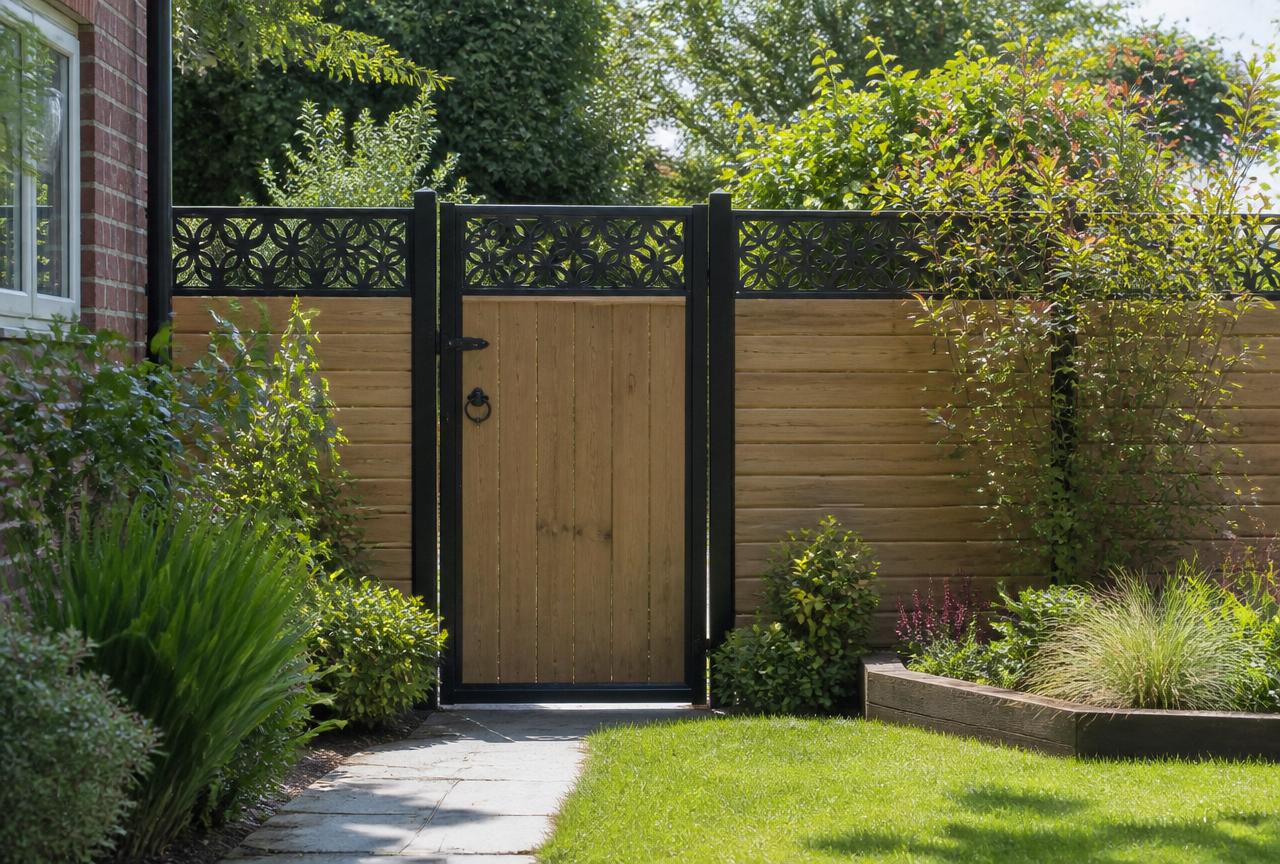
Privacy from different viewing positions
A slatted screen may hide a view from one angle while remaining open from another. Look from the house, seating area and neighbouring access routes, not only straight towards the panel. The combination of gap, slat width and viewing distance determines how much can be seen through it.
For a boundary beside a frequently used path, think about privacy when people are moving. A decorative partition within the garden can have a different purpose from an external fence. Decide where an open screen is welcome and where a more solid section would be practical. There is no single slat spacing that gives every garden the same result.
Hit and miss fencing is a different arrangement
Hit and miss fencing alternates boards across the structure, often on opposite sides. It can give a different view and airflow from a single line of slats. Products vary, so inspect the actual construction rather than assuming that every fence sold under the same description provides equal privacy.
Trellis fencing is more open again and is often chosen for planting or a decorative division. If climbers are intended, consider their future weight and maintenance as well as their appearance when newly planted. A trellis topper also changes the overall boundary height, which should be included in relevant checks before installation.
Posts, corners and changes in level
Horizontal lines make uneven levels particularly noticeable. Plan whether the fence will step with the ground or follow a defined line, and how the slats meet at corners. A small change in height across the garden can affect the appearance of the entire run. Establish the layout before ordering repeated panel sizes.
The supports must suit the chosen construction and exposure. Gaps between boards do not eliminate wind loading, and a decorative screen still needs stable posts. Existing lean, soft timber or loose connections should be assessed rather than reused automatically. A gate opening also needs its own support and clear passage width.
Selecting the finish and comparing proposals
Ask about timber suitability, finish and the maintenance recommended for the selected product. Slats provide several edges and gaps to inspect and clean, so access matters. Keep soil and planting from concealing a support problem, and leave sensible room to maintain both the screen and adjoining border.
When comparing a fitted proposal, identify the slat arrangement, run length, height, post system and removal work. Include junctions with existing walls or fencing and any side gate. The fence prices guide helps distinguish supplied components from a complete boundary installation. Choose the screening that serves the garden before treating the lowest panel price as the whole project.
Your questions answered
Is venetian fencing completely private?
Not necessarily. Gaps and viewing angles affect visibility. Examine the chosen design from the positions where privacy matters.
Is hit and miss fencing the same as slatted fencing?
The terms can describe different board arrangements. Check which side boards are fixed to and how the gaps align.
Can trellis be added above a fence?
Its supports, intended planting load and resulting overall height need checking. Include the topper in boundary and planning considerations.
Can a slatted design include a gate?
Plan the gate and supporting posts as part of the boundary. Clear opening and fittings matter as well as matching the slats.