'/%3e%3cpath%20id='spade'%20class='cls-2'%20d='M196.08,56.6l13.014,57.987-0.309-9.652,5.264-1.239c1.872,8.514,1.127,16.417-3.508,21.2-6.22-2.229-10.283-9-12.255-17.49l6.371-1.5L193.731,57.155a7.077,7.077,0,0,1-7.267-5.564,7.263,7.263,0,0,1,.171-3.822l11.8-2.777A7.261,7.261,0,0,1,196.08,56.6Zm1.688-8.932-9.39,2.209a4.523,4.523,0,0,0,.1,1.237,4.82,4.82,0,0,0,5.909,3.472,4.922,4.922,0,0,0,3.822-5.762A4.461,4.461,0,0,0,197.768,47.67Z'%20transform='translate(-94.969%20-45)'/%3e%3cpath%20id='GARDEN'%20class='cls-2'%20d='M118.015,68.918H119.6V73c0,1.581-.7,2.15-1.81,2.15s-1.809-.569-1.809-2.15V61.045c0-1.581.7-2.182,1.809-2.182s1.81,0.6,1.81,2.182v2.371h3.3v-2.15c0-3.541-1.778-5.565-5.206-5.565s-5.206,2.024-5.206,5.565V72.775c0,3.541,1.778,5.565,5.206,5.565s5.206-2.024,5.206-5.565V65.756h-4.889v3.162Zm16.127-12.963h-5.111l-3.556,22.133h3.206l0.6-4.016h4.285l0.6,4.016H137.7Zm-2.731,3.92,1.683,11.193h-3.365Zm20.031,18.212a6.5,6.5,0,0,1-.381-2.688V71.985c0-2.308-.572-3.984-2.317-4.711,1.555-.727,2.285-2.213,2.285-4.49V61.045c0-3.415-1.555-5.09-5.174-5.09h-5.27V78.087h3.492V69.076h1.206c1.588,0,2.286.759,2.286,2.814v3.478a6.8,6.8,0,0,0,.317,2.719h3.556ZM145.76,59.116c1.238,0,1.777.7,1.777,2.276v2.182c0,1.771-.793,2.34-2.095,2.34h-1.365v-6.8h1.683Zm8.855,18.971h5.524c3.492,0,5.206-1.929,5.206-5.47V61.424c0-3.541-1.714-5.47-5.206-5.47h-5.524V78.087Zm5.461-18.971c1.111,0,1.777.569,1.777,2.15V72.775c0,1.581-.666,2.15-1.777,2.15h-1.969V59.116h1.969Zm12.252,0h6.032V55.954h-9.524V78.087h9.524V74.925h-6.032V68.444h4.794V65.282h-4.794V59.116Zm16.92,18.971h3.587V55.954h-3.111V69.2l-3.588-13.248h-4.38V78.087H184.9V62.057Z'%20transform='translate(-94.969%20-45)'/%3e%3cpath%20id='SCAPE'%20class='cls-3'%20d='M110.82,88.258c0,8.278,8.935,9.4,8.935,15.357,0,2.069-.915,2.814-2.369,2.814s-2.369-.745-2.369-2.814v-2.07H110.7v1.78c0,4.636,2.327,7.285,6.816,7.285s6.815-2.649,6.815-7.285c0-8.278-8.935-9.4-8.935-15.356,0-2.07.831-2.856,2.286-2.856s2.286,0.786,2.286,2.856v1.2h4.322V88.258c0-4.636-2.286-7.285-6.733-7.285S110.82,83.622,110.82,88.258Zm26.72,11.217v4.14c0,2.069-.914,2.814-2.369,2.814s-2.369-.745-2.369-2.814V87.969c0-2.07.915-2.856,2.369-2.856s2.369,0.786,2.369,2.856v3.1h4.322V88.258c0-4.636-2.327-7.285-6.815-7.285s-6.816,2.649-6.816,7.285v15.067c0,4.636,2.327,7.285,6.816,7.285s6.815-2.649,6.815-7.285v-3.85H137.54ZM156.447,81.3h-6.691L145.1,110.279h4.2l0.79-5.257h5.61l0.79,5.257H161.1Zm-3.574,5.133,2.2,14.653h-4.405ZM171.614,81.3h-6.732v28.975h4.571V99.393h2.161c4.572,0,6.816-2.525,6.816-7.161V88.465C178.43,83.829,176.186,81.3,171.614,81.3Zm0,4.139c1.455,0,2.245.662,2.245,2.732v4.346c0,2.07-.79,2.732-2.245,2.732h-2.161v-9.81h2.161Zm15.168,0h7.9V81.3H182.211v28.975h12.467V106.14h-7.9V97.654h6.275V93.515h-6.275V85.443Z'%20transform='translate(-94.969%20-45)'/%3e%3c/svg%3e)
Driveway repair for block paving and resin drives
A driveway repair only lasts if it deals with the reason the surface failed. Sunken block paving, cracked resin and crumbling edges usually point to something underneath: a weak base, poor drainage or missing edge restraint. Gardenscape assesses the cause on a free site visit, then explains whether a repair makes sense or whether part of the drive should be relaid.
We work on block paving, resin and other driveway surfaces across Essex. Every job is priced with one fixed written quote, so you know the scope before anything is lifted.
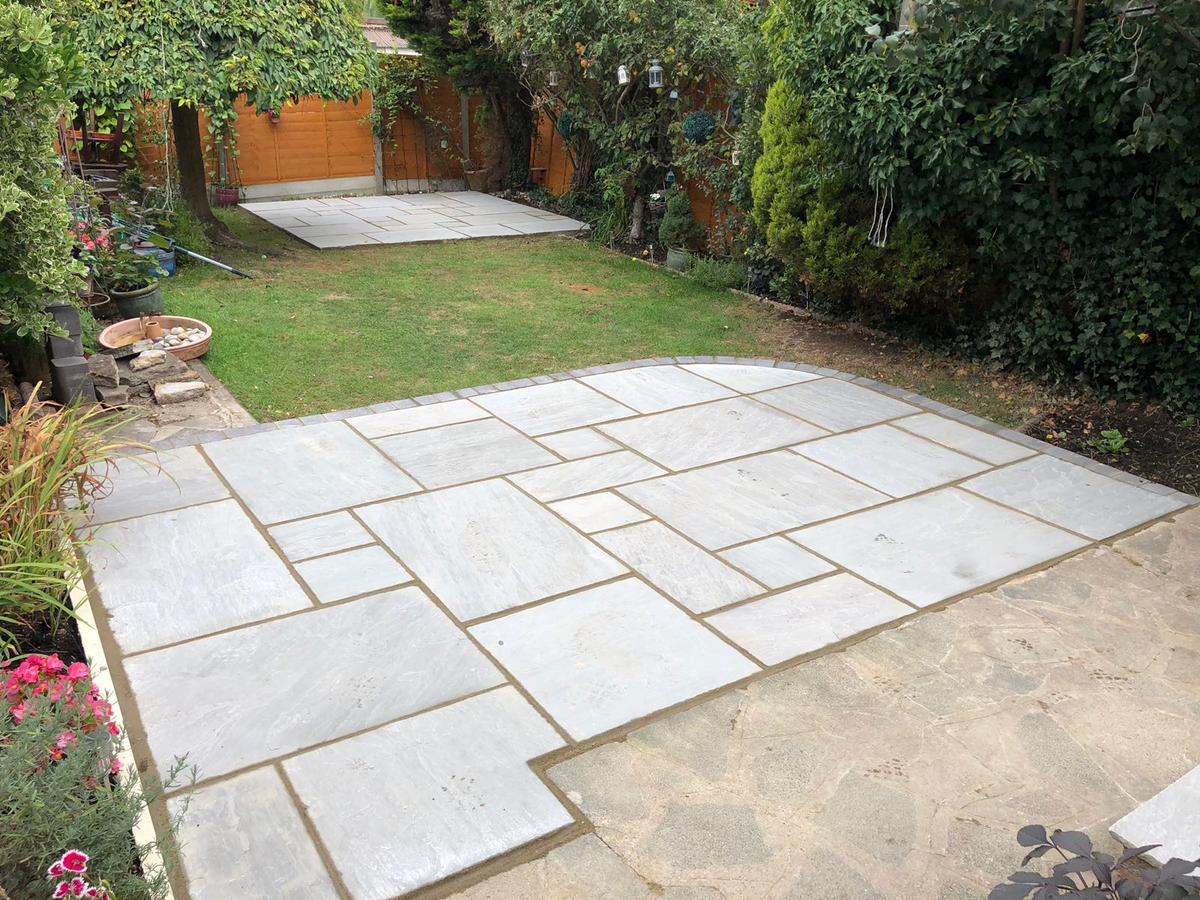
Sunken block paving
Dips usually appear where cars turn, park or where a trench was dug and backfilled badly. Because blocks interlock, the affected area can often be lifted, the base rebuilt and compacted, and the same blocks relaid so the repair blends in.
If dips are widespread, the original sub-base may be too thin across the whole drive. In that case a patch repair would move the problem rather than fix it, and we will tell you so.
Driveway joint repair
Joint sand holds block paving together. Once it washes or brushes out, blocks rock, weeds take hold and edges loosen. Cleaning out the joints, re-sanding with kiln dried sand and compacting restores the interlock.
Joint repair is often the right first step for a sound drive that has simply lost its sand. It is worth doing before loose blocks start to crack or spread.
Resin driveway repair and cracking
Resin driveway cracking usually reflects movement or cracks in the surface below, or a layer laid too thin. Loose stones on the surface can point to a mix or curing problem. The repair depends on which of these applies.
Small areas can sometimes be cut out and relaid, but matching the colour of aged resin is not always exact. We explain how a repair will look before you decide, and when a resurface of the whole area gives a better result.
Edges, kerbs and tarmac or asphalt drives
Sinking edges are a common sign that edge restraints were missing or have moved. Resetting kerbs in concrete and rebuilding the base behind them stops the surface spreading further.
For tarmac and asphalt drives that have broken up, patching rarely matches the surrounding surface or lasts long if the base is failing. We will assess the drive and discuss whether a block paving or resin replacement suits you better.
Repair or replace?
Repair makes sense when the problem is local and the rest of the drive is sound. Replacement makes sense when faults are spread across the surface, drainage is poor throughout or the drive no longer suits how you use it.
Our comparison of repair versus replacement sets out the trade-offs. Either way, you get an honest view and a fixed written quote after the visit.
Your questions answered
Can sunken block paving be repaired?
Usually. The blocks are lifted, the base rebuilt and compacted, and the same blocks relaid so the area matches the rest of the drive.
Can a cracked resin driveway be fixed?
Sometimes. It depends on what caused the cracks. Cracks from the base beneath often return unless the base is dealt with first.
Do you take on small repair jobs?
Tell us what is wrong and send photographs. We will say whether a repair is the right answer before arranging a visit.
What causes driveway edges to sink?
Missing or failed edge restraint and a weak base at the edge are the usual causes. Resetting kerbs stops further spread.
How is the repair priced?
We assess the cause on a free site visit, then give one fixed written quote for the agreed repair.