'/%3e%3cpath%20id='spade'%20class='cls-2'%20d='M196.08,56.6l13.014,57.987-0.309-9.652,5.264-1.239c1.872,8.514,1.127,16.417-3.508,21.2-6.22-2.229-10.283-9-12.255-17.49l6.371-1.5L193.731,57.155a7.077,7.077,0,0,1-7.267-5.564,7.263,7.263,0,0,1,.171-3.822l11.8-2.777A7.261,7.261,0,0,1,196.08,56.6Zm1.688-8.932-9.39,2.209a4.523,4.523,0,0,0,.1,1.237,4.82,4.82,0,0,0,5.909,3.472,4.922,4.922,0,0,0,3.822-5.762A4.461,4.461,0,0,0,197.768,47.67Z'%20transform='translate(-94.969%20-45)'/%3e%3cpath%20id='GARDEN'%20class='cls-2'%20d='M118.015,68.918H119.6V73c0,1.581-.7,2.15-1.81,2.15s-1.809-.569-1.809-2.15V61.045c0-1.581.7-2.182,1.809-2.182s1.81,0.6,1.81,2.182v2.371h3.3v-2.15c0-3.541-1.778-5.565-5.206-5.565s-5.206,2.024-5.206,5.565V72.775c0,3.541,1.778,5.565,5.206,5.565s5.206-2.024,5.206-5.565V65.756h-4.889v3.162Zm16.127-12.963h-5.111l-3.556,22.133h3.206l0.6-4.016h4.285l0.6,4.016H137.7Zm-2.731,3.92,1.683,11.193h-3.365Zm20.031,18.212a6.5,6.5,0,0,1-.381-2.688V71.985c0-2.308-.572-3.984-2.317-4.711,1.555-.727,2.285-2.213,2.285-4.49V61.045c0-3.415-1.555-5.09-5.174-5.09h-5.27V78.087h3.492V69.076h1.206c1.588,0,2.286.759,2.286,2.814v3.478a6.8,6.8,0,0,0,.317,2.719h3.556ZM145.76,59.116c1.238,0,1.777.7,1.777,2.276v2.182c0,1.771-.793,2.34-2.095,2.34h-1.365v-6.8h1.683Zm8.855,18.971h5.524c3.492,0,5.206-1.929,5.206-5.47V61.424c0-3.541-1.714-5.47-5.206-5.47h-5.524V78.087Zm5.461-18.971c1.111,0,1.777.569,1.777,2.15V72.775c0,1.581-.666,2.15-1.777,2.15h-1.969V59.116h1.969Zm12.252,0h6.032V55.954h-9.524V78.087h9.524V74.925h-6.032V68.444h4.794V65.282h-4.794V59.116Zm16.92,18.971h3.587V55.954h-3.111V69.2l-3.588-13.248h-4.38V78.087H184.9V62.057Z'%20transform='translate(-94.969%20-45)'/%3e%3cpath%20id='SCAPE'%20class='cls-3'%20d='M110.82,88.258c0,8.278,8.935,9.4,8.935,15.357,0,2.069-.915,2.814-2.369,2.814s-2.369-.745-2.369-2.814v-2.07H110.7v1.78c0,4.636,2.327,7.285,6.816,7.285s6.815-2.649,6.815-7.285c0-8.278-8.935-9.4-8.935-15.356,0-2.07.831-2.856,2.286-2.856s2.286,0.786,2.286,2.856v1.2h4.322V88.258c0-4.636-2.286-7.285-6.733-7.285S110.82,83.622,110.82,88.258Zm26.72,11.217v4.14c0,2.069-.914,2.814-2.369,2.814s-2.369-.745-2.369-2.814V87.969c0-2.07.915-2.856,2.369-2.856s2.369,0.786,2.369,2.856v3.1h4.322V88.258c0-4.636-2.327-7.285-6.815-7.285s-6.816,2.649-6.816,7.285v15.067c0,4.636,2.327,7.285,6.816,7.285s6.815-2.649,6.815-7.285v-3.85H137.54ZM156.447,81.3h-6.691L145.1,110.279h4.2l0.79-5.257h5.61l0.79,5.257H161.1Zm-3.574,5.133,2.2,14.653h-4.405ZM171.614,81.3h-6.732v28.975h4.571V99.393h2.161c4.572,0,6.816-2.525,6.816-7.161V88.465C178.43,83.829,176.186,81.3,171.614,81.3Zm0,4.139c1.455,0,2.245.662,2.245,2.732v4.346c0,2.07-.79,2.732-2.245,2.732h-2.161v-9.81h2.161Zm15.168,0h7.9V81.3H182.211v28.975h12.467V106.14h-7.9V97.654h6.275V93.515h-6.275V85.443Z'%20transform='translate(-94.969%20-45)'/%3e%3c/svg%3e)
Fence repairs assessed around the damaged section
A broken panel does not always mean replacing an entire boundary, but a neat-looking panel is not worth keeping if its supports are failing. Gardenscape supplies and installs fencing and gates across Essex. If part of your fence is damaged, ask us to assess the affected section and discuss whether targeted work is suitable.
Describe what has changed: a panel split in the wind, a post moving at ground level, a leaning run or a gate that no longer latches. Photographs can help identify the area for discussion. The condition of the surrounding fence matters too, because a replacement component still depends on what it is attached to.
Separate panel damage from support failure
Look at the panel and its frame as well as the visible boards. A local break, loose fixing and decayed bottom rail may require different work. A replacement panel also needs to fit the actual opening, which can differ from a nominal size where posts have moved or the boundary was built in stages.
Before retaining the posts, their condition and stability need checking. Timber can deteriorate close to ground level while appearing sound higher up, and concrete supports can be damaged too. Replacing the infill without addressing a weak support risks leaving the cause of movement in place.
Assess loose posts and leaning sections
A leaning fence can result from a failed post, inadequate footing, disturbed ground or damage across several bays. The direction and extent of movement help define the assessment, but appearance alone does not establish the cause. Nearby paving, planting and access can affect how a post could be removed or replaced.
Where only one support has failed, targeted replacement may be an option if the neighbouring structure remains suitable. Where deterioration runs along the boundary, a longer replacement section may make more sense. Discuss the condition of the retained parts so the proposed work is clear rather than assuming a single new post resolves everything.
Match the retained fence where practical
Existing panel style, height, post spacing and gravel boards influence what can be fitted into a damaged section. Close board, feather edge and lap panel fencing do not all use the same arrangement. Send a photograph of an undamaged bay as well as the broken area to show the intended appearance.
An exact visual match is not always available, particularly with older timber and discontinued products. New wood will also look different from weathered fencing. Consider whether a compatible replacement is acceptable or whether changing a short, clearly defined run would give a more consistent result.
Include gates and adjoining fittings
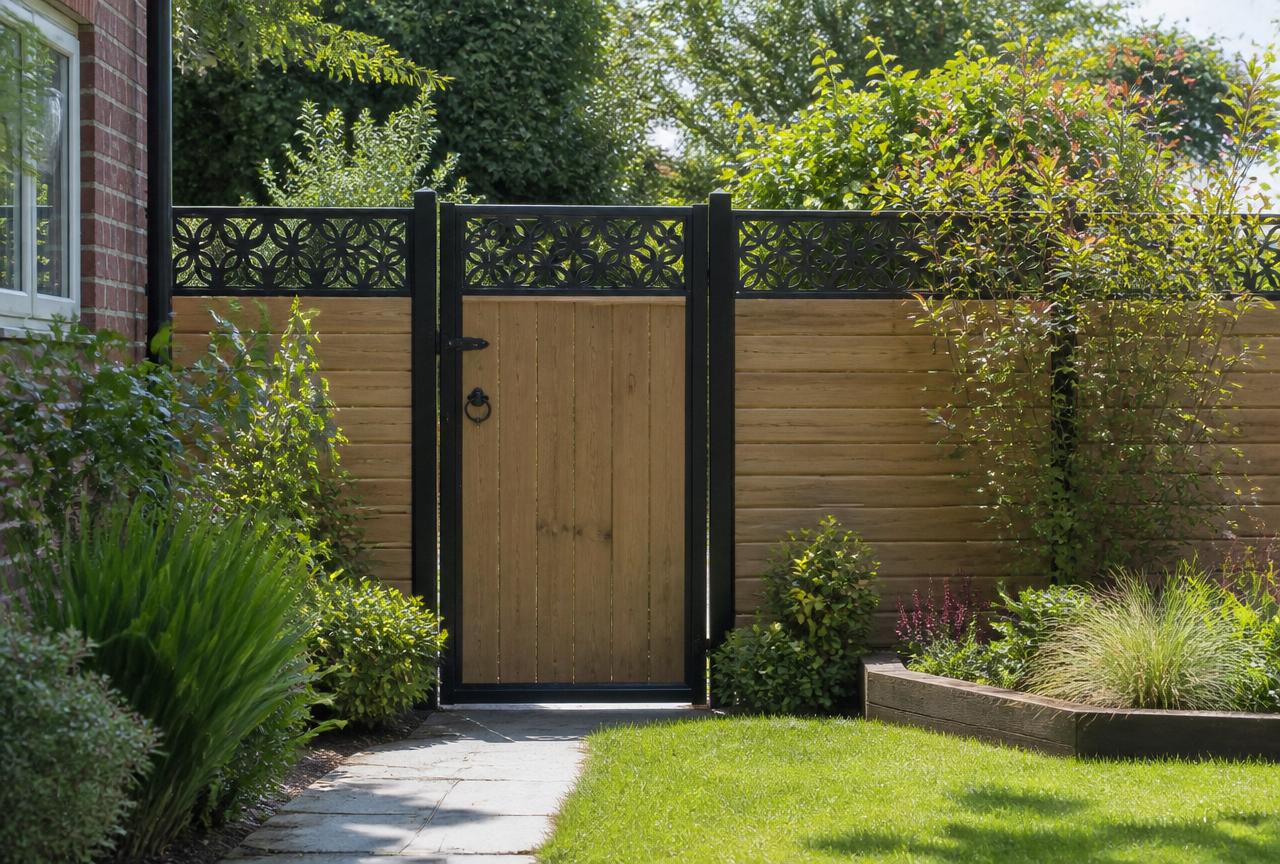
A gate that drags or misses its latch may be affected by a leaning supporting post rather than the gate leaf itself. Hinges, fixings, frame condition and clearance through the swing all need checking. Adjusting the latch is not a lasting answer if the support continues to move.
Mention gates attached to the damaged fence even if they still work. Replacing a shared support can affect the opening and alignment. Where the gate itself needs replacement, agree the usable width and fittings with the boundary work so the entrance remains practical for bins, bicycles and everyday access.
Agree the repair area and access
Before work is agreed, clarify the extent of the damaged section, the components proposed for retention and what needs removing. Boundary ownership and permission to work from the other side may need resolving with a neighbour. Tell us about restricted access, climbing plants and structures attached to the fence.
Keep clear of unstable panels and do not force a leaning fence upright yourself. If there is a risk to people or neighbouring property, arrange appropriate help to make the area safe. For a repair enquiry, provide your location, photographs and approximate affected length so we can discuss a suitable assessment and scope.
Your questions answered
Can just one fence panel be replaced?
Potentially, if the surrounding posts, fittings and opening are suitable. The assessment should establish whether the damage is isolated or part of wider deterioration before deciding on panel replacement.
Does a leaning fence always need replacing?
No, but the cause matters. A local support failure differs from widespread rot or ground movement. Suitable work can only be discussed properly after considering the affected section and its neighbours.
Can existing posts be kept?
Sound, stable posts may be retained where they suit the proposed work. Appearance alone is not enough: the ground-level condition, fixings and ability to support the replacement need checking.
What if my side gate has started dropping?
Include photographs of the gate, hinges, latch and supporting posts. The problem may involve fittings, the frame, the supports or ground clearance, so a gate replacement is not automatically the answer.